
 One of the early parts of the SEO process, and of a site audit, is to establish where the site under scrutiny lies is the search rankings. Initially we would use the keywords we arrived at in the initial assessment of the site. Whilst these keywords are in no way the definitive list, they will serve as a benchmark for future work and this part also helps establish the deliverables for the project.
Depending on the sites ‘target’ market, the search can be conducted on any number of search engines at any one time. Once we do the initial search rank report this then allows us to see where exactly a site lies and what sites are ranking above it. More importantly, we can then track the site over time to see what improvements the optimisation is having on the sites rank. The report will also allow us to keep a track on how the competition is fairing on these keywords. We can see if there are any sudden jumps in a sites rank and investigate further. 
The premise here is very simple: if you are not getting the traffic, then someone else is. The further back from the top spot the less traffic you are going to get. And the difference in traffic volumes for each birth from one to ten in the search results is staggering. Advertising network Chitika looked at a sample of traffic coming into their network driven there by Google.
They analysed the data according to where the sites were according to the results placement. Top position took roughly 34% of all traffic and the difference between that and the second placed site was a whopping 100% as second place took only 16% of the traffic. From there on back, it’s a race to the bottom with the site ranked ten taking only 2.5% of the total traffic.
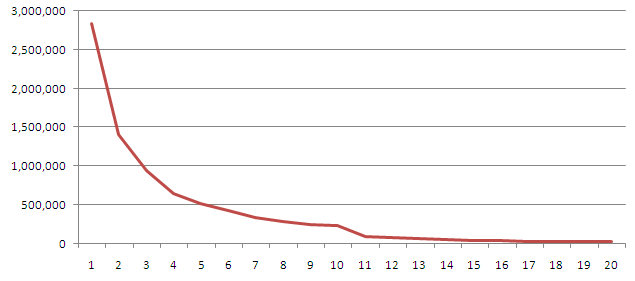
So, not only is page one the ‘Holy Gail’, page one would seem to be nirvana! Interestingly, the move from page one to page two was equally devastating. The site ranked ten, as mentioned, took 2.5% of the totla page traffic. Turning the page halved the volume to just over 1%. In gross terms the sites on page one managed to devour 94.5% of all the traffic for the particular keywords.
You can see this behaviour if you apply some filtering to your analytics to see where the keywords that delivered traffic to your site, physically ranked at the time they were clicked.